Workout Plans
Push / Pull / Legs: The Complete Guide to the Classic Split
September 25, 2026 · 5 min read · Training
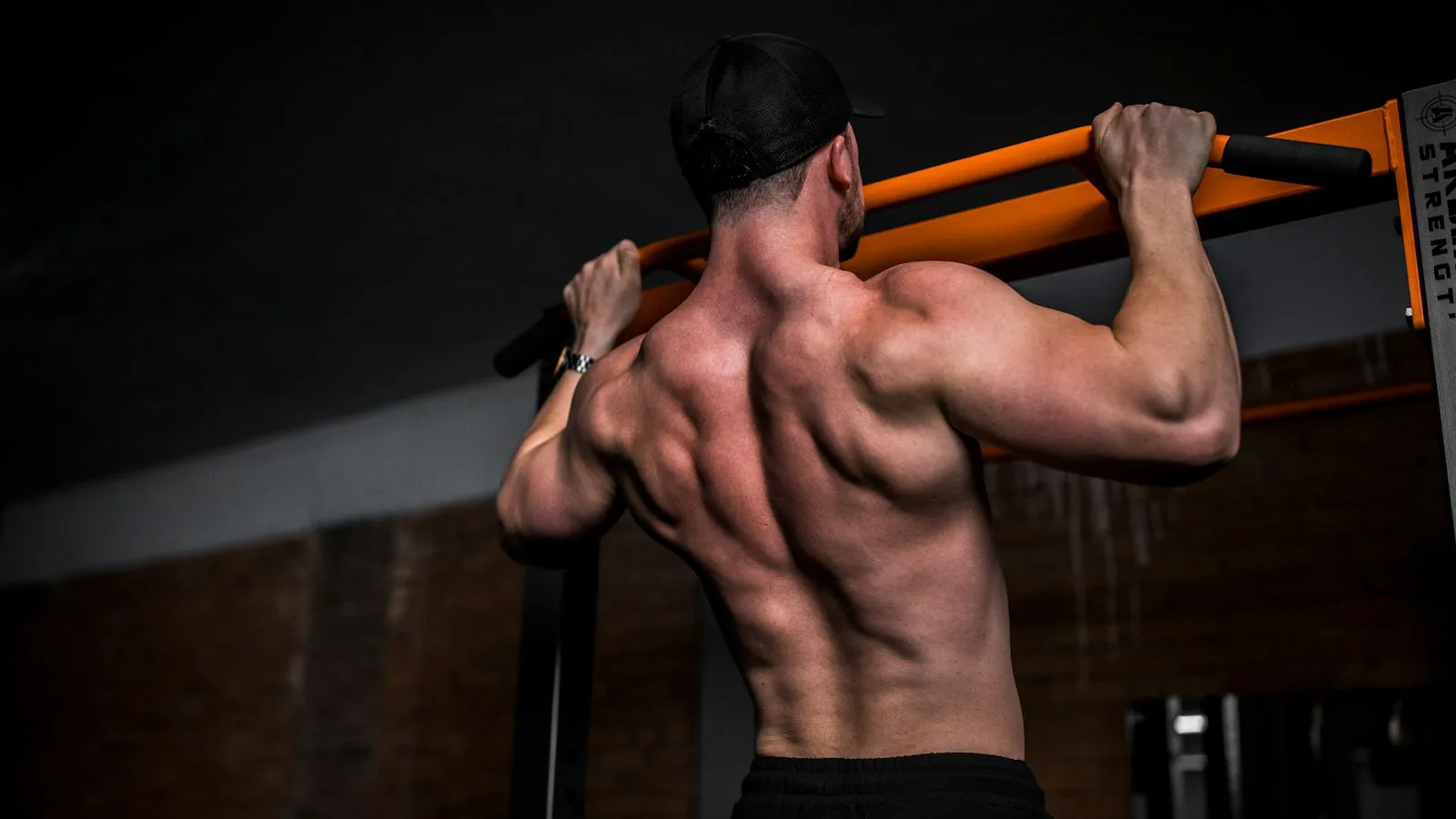
Push/pull/legs (PPL) is one of the most popular ways to organise strength training. It groups exercises by movement pattern, so muscles that work together are trained together and then get several days to recover.
The three days
| Day | Movement | Main muscles | Example exercises |
|---|---|---|---|
| Push | Pressing away from you | Chest, shoulders, triceps | Bench press, overhead press, incline dumbbell press, lateral raise, triceps pushdown |
| Pull | Pulling toward you | Back, rear shoulders, biceps | Pull-up or lat pulldown, barbell or cable row, face pull, curl |
| Legs | Lower body | Quads, hamstrings, glutes, calves | Squat, Romanian deadlift, leg press, leg curl, calf raise |
Why it works
- Logical grouping. A pressing exercise uses your triceps, so training triceps on the same day means they’re fresh again by the next push day.
- Room for volume. Each session focuses on fewer muscles, so you can do more sets for each one. A meta-analysis found a dose-response relationship between weekly sets and muscle growth, with roughly 10+ sets per muscle per week producing the most (Schoenfeld et al., 2017).
- Recovery built in. When you train push, your pulling muscles and legs rest.
3 days or 6 days?
The key question is frequency. A meta-analysis found that training each muscle at least twice a week produced more growth than once a week (Schoenfeld et al., 2016).
Frequency per muscle for common splits. Training each muscle at least twice a week beat once a week in a meta-analysis (Schoenfeld et al., 2016).
View as table
| Item | × |
|---|---|
| PPL, 3 days | 1 |
| Full body, 3 days | 3 |
| Upper/lower, 4 days | 2 |
| PPL, 6 days | 2 |
- PPL 3 days a week trains each muscle only once a week. It can work, but you’ll need plenty of sets in each session.
- PPL 6 days a week (push, pull, legs, push, pull, legs, rest) trains each muscle twice — the more effective version, but a big time commitment.
If you can only train three days, a full-body routine is usually a better choice. With four days, consider an upper/lower split.
A sample 6-day week
| Mon | Tue | Wed | Thu | Fri | Sat | Sun |
|---|---|---|---|---|---|---|
| Push A | Pull A | Legs A | Push B | Pull B | Legs B | Rest |
Use two versions of each day: A days built around heavier compound lifts (5–8 reps), B days with more moderate weights (8–15 reps).
Sample sessions
Push A
| Exercise | Sets × reps |
|---|---|
| Bench press | 4 × 5–8 |
| Overhead press | 3 × 6–10 |
| Incline dumbbell press | 3 × 8–12 |
| Lateral raise | 3 × 12–15 |
| Triceps pushdown | 3 × 10–15 |
Pull A
| Exercise | Sets × reps |
|---|---|
| Pull-up or lat pulldown | 4 × 6–10 |
| Barbell or chest-supported row | 3 × 6–10 |
| Cable row | 3 × 10–12 |
| Face pull | 3 × 12–15 |
| Dumbbell curl | 3 × 10–12 |
Legs A
| Exercise | Sets × reps |
|---|---|
| Back squat | 4 × 5–8 |
| Romanian deadlift | 3 × 6–10 |
| Leg press or split squat | 3 × 10–12 |
| Leg curl | 3 × 10–15 |
| Calf raise | 3 × 10–15 |
Who is PPL for?
| Good fit | Probably not ideal |
|---|---|
| Intermediate lifters who enjoy training often | Complete beginners |
| People who can reliably train 5–6 days a week | Anyone with 2–3 days available |
| Lifters who want high volume per muscle | People with physically demanding jobs who struggle to recover |
Common mistakes
- Running PPL 3 days a week with low volume. Each muscle then gets one modest session per week.
- Too many exercises per day. Five or six is plenty; quality beats quantity.
- Ignoring legs. Leg day is the one most often skipped. Don’t.
- No lighter weeks. Six days a week adds up; plan a deload every 6–8 weeks.
Push B, Pull B and Legs B
The B days use moderate weights and higher reps:
| Push B | Pull B | Legs B |
|---|---|---|
| Incline dumbbell press 3 × 8–12 | Single-arm row 3 × 10–12 | Front squat or hack squat 3 × 8–12 |
| Seated dumbbell press 3 × 10–12 | Lat pulldown 3 × 10–12 | Bulgarian split squat 3 × 10 each |
| Cable fly 3 × 12–15 | Rear-delt fly 3 × 12–15 | Hip thrust 3 × 10–12 |
| Lateral raise 3 × 15 | Hammer curl 3 × 10–12 | Leg curl 3 × 12–15 |
| Overhead triceps extension 3 × 12 | Face pull 3 × 15 | Calf raise 3 × 15 |
How the weekly volume adds up
Across a 6-day week, each major muscle gets roughly 9–16 direct sets, more once you count helper muscles. That sits well within the dose-response relationship between weekly sets and growth (Schoenfeld et al., 2017). If recovery is a struggle, cut one set from each exercise before cutting a day.
How to progress
- A days: double progression in the 5–8 rep range. Add weight when every set reaches 8.
- B days: add reps first, then weight.
- Every 6–8 weeks: a lighter week with half the sets.
Making PPL fit your week
| Days available | Layout |
|---|---|
| 6 | Push, Pull, Legs, Push, Pull, Legs, Rest |
| 5 | Rotate: Push, Pull, Legs, Rest, Push, Pull, Rest; then continue from Legs |
| 4 | Upper/lower is usually a better fit |
FAQ
Can I do PPL with 4 or 5 days? Yes — rotate through the days continuously (push, pull, legs, rest, push…). Each muscle is then trained about 1.5 times per week.
Where does core work go? Add 2–3 sets at the end of any two sessions.
The bottom line
PPL is a logical, flexible split. Run it six days a week to hit each muscle twice — and if you have fewer days, full-body or upper/lower will usually serve you better.
Sources
- Schoenfeld BJ, Ogborn D, Krieger JW (2016). Effects of resistance training frequency on measures of muscle hypertrophy: a systematic review and meta-analysis. Sports Medicine. doi:10.1007/s40279-016-0543-8
- Schoenfeld BJ, Ogborn D, Krieger JW (2017). Dose-response relationship between weekly resistance training volume and increases in muscle mass. Journal of Sports Sciences. doi:10.1080/02640414.2016.1210197
This article is general education for healthy adults, not medical advice. Check with a qualified professional before starting a new exercise or nutrition plan, especially if you have a medical condition. Full disclaimer.
Keep reading
The Beginner Full-Body Dumbbell Workout (3 Days a Week)
A complete starter routine you can do at home with one pair of dumbbells — with sets, reps and how to progress.

How Much Exercise Do You Actually Need? What the WHO Guidelines Say
The global minimums for cardio and strength training, translated into a week you can actually schedule — plus an 8-week starter plan.
The 20-Minute No-Equipment Workout You Can Do Anywhere
A full-body bodyweight circuit with beginner, intermediate and advanced options.