Workout Plans
The 20-Minute No-Equipment Workout You Can Do Anywhere
September 29, 2026 · 4 min read · Training
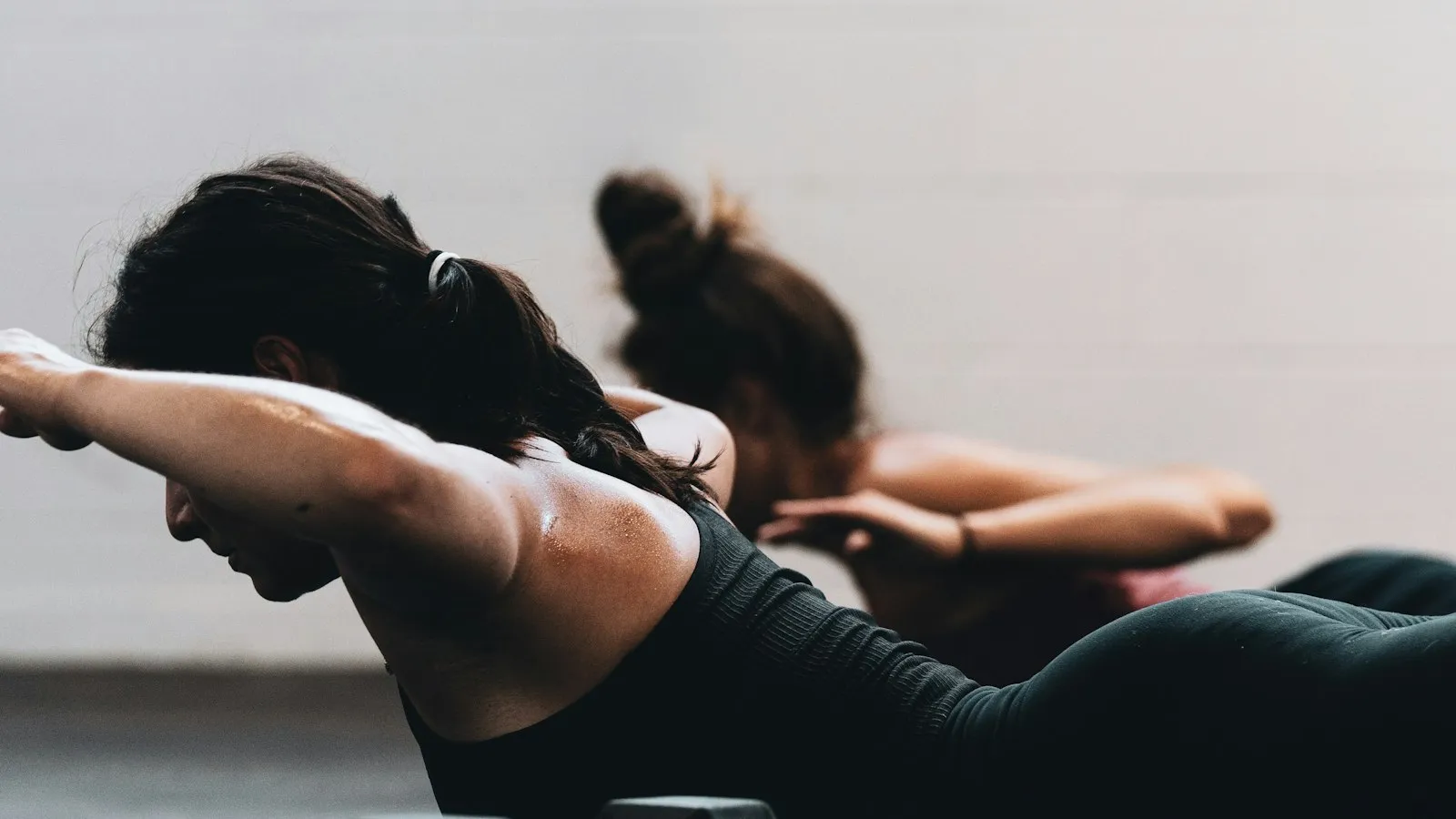
No gym, no equipment, no problem. Bodyweight training can build real strength and fitness — research shows that lighter loads can build as much muscle as heavy ones, provided sets are taken close to failure (Schoenfeld et al., 2017). The trick is choosing versions that are hard enough for you.
How it works
This is a circuit: do each exercise once, back to back, then rest and repeat.
- Work for 40 seconds, rest 20 seconds between exercises.
- Rest 60–90 seconds after the last exercise.
- Complete 3 rounds (beginners: 2).
The 3-minute warm-up
March or jog on the spot for a minute, then do 10 arm circles each way, 10 bodyweight squats and 10 glute bridges.
The circuit
| # | Exercise | Beginner | Intermediate | Advanced |
|---|---|---|---|---|
| 1 | Squat | Squat to a chair | Bodyweight squat | Jump squat |
| 2 | Push-up | Wall or bench push-up | Knee push-up / full push-up | Feet-elevated push-up |
| 3 | Lunge | Static split squat | Reverse lunge | Bulgarian split squat |
| 4 | Row / pull | Towel row on a door | Table row | Slow table row with pause |
| 5 | Hip bridge | Two-leg bridge | Two-leg bridge, 2-s hold | Single-leg bridge |
| 6 | Core | Dead bug | Plank | Plank with shoulder taps |
Table row: lie under a sturdy table, grip the edge, and pull your chest up toward it. Test that the table can take your weight first. Towel row: loop a strong towel around both handles of a closed, sturdy door.
Choosing your level
Pick the version where you can keep good form for the full 40 seconds but the last 10 seconds are genuinely hard. If you finish a round feeling you could easily do it all again, move up a level on one or two moves.
Make it harder over time
Bodyweight training needs its own kind of progressive overload:
| Week | Change |
|---|---|
| 1–2 | Learn the moves. 2–3 rounds. |
| 3–4 | Add reps within each 40-second window. |
| 5–6 | Move up a version on any move that feels easy. |
| 7–8 | Slow the lowering to 3 seconds; add pauses at the bottom. |
Other tools: cut rest between rounds by 15 seconds, or switch to 45 seconds work / 15 seconds rest.
Form cues
- Squat: feet shoulder-width, chest up, knees track over toes, heels down.
- Push-up: body in a straight line from head to heels; elbows about 45° from your sides.
- Lunge: step back, lower the back knee toward the floor, front shin roughly vertical.
- Row: squeeze your shoulder blades together at the top; lower slowly.
- Bridge: squeeze your glutes at the top; don’t arch your lower back.
- Plank: push the floor away and breathe steadily.
How often?
Do this 2–4 times per week on non-consecutive days. Add brisk walks on other days and you’ll comfortably meet the WHO’s recommendation of at least 150 minutes of moderate activity plus muscle-strengthening on two or more days a week (Bull et al., 2020).
A week that works
| Mon | Tue | Wed | Thu | Fri | Sat | Sun |
|---|---|---|---|---|---|---|
| Circuit | 30-min walk | Circuit | 30-min walk | Circuit | Long walk or bike | Rest |
Common mistakes
- Racing through reps. Speed isn’t the goal; control is.
- Staying on the easy version forever. If 40 seconds feels comfortable, move up.
- Holding your breath. Breathe out on the hardest part of each rep.
A 4-week starter plan
| Week | Rounds | Work / rest | Sessions |
|---|---|---|---|
| 1 | 2 | 30 s / 30 s | 2 |
| 2 | 3 | 30 s / 30 s | 3 |
| 3 | 3 | 40 s / 20 s | 3 |
| 4 | 3 | 40 s / 20 s, harder versions where possible | 3 |
Why lighter loads still work
A meta-analysis comparing low-load and high-load training found similar muscle growth with both, as long as sets were taken close to failure. Heavier loads were better for maximal strength (Schoenfeld et al., 2017). For bodyweight training, that means the last few seconds of each interval should be genuinely hard.
| If the last 10 seconds feel… | Then… |
|---|---|
| Easy | Move up a version, or slow down each rep |
| Hard but controlled | Perfect, stay here |
| Form breaks down | Drop a version for the rest of the set |
Cool down
Finish with two minutes of slow walking and a few easy stretches for your hips, chest and calves, held for 20–30 seconds each.
FAQ
Is 20 minutes enough? For general strength and fitness, yes — especially three times a week. Three rounds gives each movement three hard sets per session, and sets taken close to failure are what drive progress (Schoenfeld et al., 2017).
Can I do it every day? Muscles need recovery. Alternate circuit days with walking days.
I can’t do a push-up yet. Start with wall or counter push-ups. Our first push-up plan gets most people there in six weeks.
The bottom line
Twenty minutes, no equipment, whole body. Pick the version that challenges you, finish sets close to failure, and progress every week.
Sources
- Bull FC et al. (2020). World Health Organization 2020 guidelines on physical activity and sedentary behaviour. British Journal of Sports Medicine. doi:10.1136/bjsports-2020-102955
- Schoenfeld BJ et al. (2017). Strength and hypertrophy adaptations between low- vs. high-load resistance training: a systematic review and meta-analysis. Journal of Strength and Conditioning Research. doi:10.1519/JSC.0000000000002200
This article is general education for healthy adults, not medical advice. Check with a qualified professional before starting a new exercise or nutrition plan, especially if you have a medical condition. Full disclaimer.
Keep reading
The Beginner Full-Body Dumbbell Workout (3 Days a Week)
A complete starter routine you can do at home with one pair of dumbbells — with sets, reps and how to progress.

How Much Exercise Do You Actually Need? What the WHO Guidelines Say
The global minimums for cardio and strength training, translated into a week you can actually schedule — plus an 8-week starter plan.
Progressive Overload: The One Principle Behind Every Program That Works
Why your body only changes when you ask it to do a little more — and five practical ways to do it.