Fitness
Progressive Overload: The One Principle Behind Every Program That Works
September 28, 2026 · 5 min read · Training
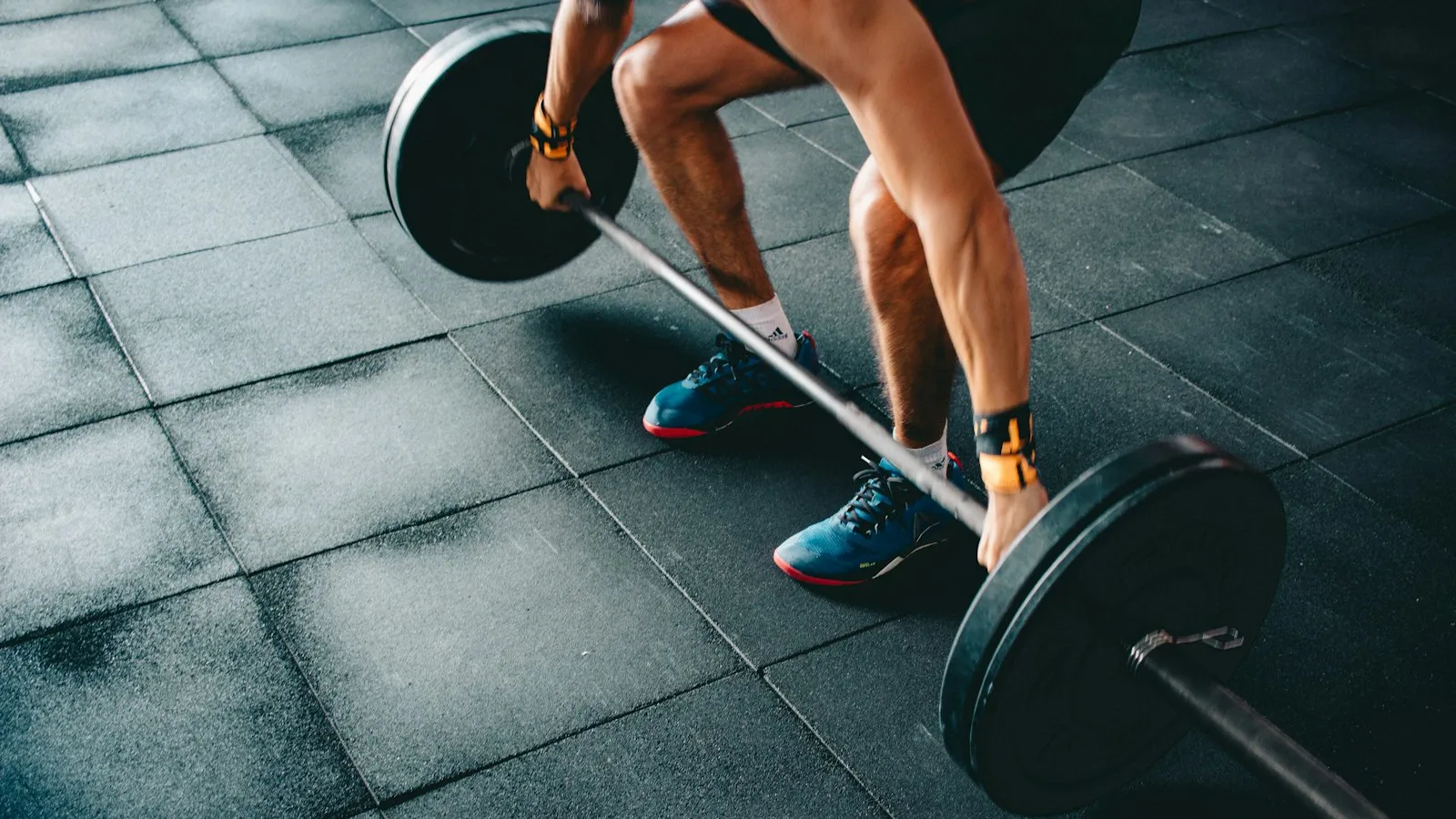
If you remember one idea about training, make it this: your body adapts to the demands you place on it, and only to those demands. Do the same workout with the same weights for six months and you’ll get good at that workout — then stop improving. Progress requires a gradual, deliberate increase in challenge. That’s progressive overload.
Why it works
Training is a stress. Your body responds by repairing and adapting so the same stress is easier next time: muscles grow, your nervous system gets better at recruiting muscle fibres, and connective tissue toughens up. Once you’ve adapted, the old stimulus is no longer a challenge. To keep adapting, the stimulus has to grow.
The research backs this from several angles.
Schoenfeld et al. (2017, volume); Androulakis-Korakakis et al. (2020); Schoenfeld et al. (2017, load)
A 2017 meta-analysis by Schoenfeld and colleagues found a clear dose-response relationship between weekly training volume and muscle growth. Increasing the work you do over time is one of the most reliable levers you have.
Five ways to progress
Adding weight to the bar is the obvious one, but it isn’t the only one — and for home training it often isn’t possible.
| Method | Example | Best for |
|---|---|---|
| Load | Squat 60 kg → 62.5 kg for the same reps | Gym training, strength |
| Reps | 3 × 8 → 3 × 10 at the same weight | Dumbbells, fixed weights |
| Sets | 2 sets → 3 sets per exercise | Building volume over a block |
| Difficulty | Knee push-up → full push-up → feet-elevated | Bodyweight training |
| Control | Slower lowering phase, pause at the bottom | Any setting, technique work |
Double progression: the method that just works
Pick a rep range such as 8–12. Start with a weight you can lift for 8 good reps. Each session, try to add a rep. When you reach 12 reps on every set, increase the weight and start again at 8.
Here’s what that looks like over six sessions of dumbbell rows:
| Session | Weight | Set 1 | Set 2 | Set 3 | Next time |
|---|---|---|---|---|---|
| 1 | 16 kg | 9 | 8 | 8 | Same weight |
| 2 | 16 kg | 10 | 9 | 9 | Same weight |
| 3 | 16 kg | 11 | 11 | 10 | Same weight |
| 4 | 16 kg | 12 | 12 | 12 | Go up |
| 5 | 18 kg | 9 | 8 | 8 | Same weight |
| 6 | 18 kg | 10 | 9 | 9 | Same weight |
Notice the reps drop when the weight goes up — that’s normal and expected. Over a few months, this simple rule produces steady, sustainable gains.
Linear progression for beginners
New lifters can often add a little weight every session on big barbell lifts: about 2.5 kg for upper-body lifts and 5 kg for lower-body lifts, as long as every rep was clean. When you miss reps, repeat the weight. Miss twice in a row? Drop about 10% and build back up.
You don’t need maximal weights
Heavy loads aren’t the only route to muscle. A 2017 meta-analysis comparing low-load (under 60% of one-rep max) and high-load training found similar muscle growth as long as sets were taken close to failure, while heavier loads produced greater gains in maximal strength. So if your goal is muscle and general fitness, adding reps with lighter weights is a perfectly valid way to overload.
How fast should you progress?
Slower than your ego wants. Beginners can often add weight or reps every session for the first few months. After that, progress slows to weekly, then monthly. Signs you’re pushing too fast:
- your form breaks down on the last reps;
- joints, not muscles, are complaining;
- you’re failing to match last week’s numbers for two or three sessions in a row.
When that happens, hold the weight steady, clean up technique, and consider a lighter week — a deload.
The minimum that still works
Good news for busy people: a 2020 systematic review by Androulakis-Korakakis and colleagues found that even a single set per exercise of roughly 6–12 reps at a challenging load, two to three times a week, produced meaningful strength gains over 8–12 weeks in trained men. More volume tends to produce more results, but you don’t need marathon sessions to make progress.
Write it down
You can’t progressively overload what you don’t measure. Record the exercise, weight, sets and reps every session. Next time, aim to beat one number — just one. Over 12 weeks, those small wins compound. See our guide to tracking your workouts.
Common mistakes
- Adding weight at the expense of form. Bigger numbers with worse technique aren’t progress.
- Changing programs every two weeks. You never give any plan time to work.
- Progressing everything at once. Change one variable at a time.
FAQ
What if my gym’s dumbbells jump in big increments? Add reps beyond the range, slow the tempo, or add a set before moving up.
Do I need to progress every session? No. Beginners often can; experienced lifters progress over weeks and months.
The bottom line
- Your body adapts to what you ask of it, so the ask has to grow.
- Progress load, reps, sets, difficulty or control — not just weight.
- Use double progression to make it automatic.
- Track every session and beat one number at a time.
Sources
- Schoenfeld BJ, Ogborn D, Krieger JW (2017). Dose-response relationship between weekly resistance training volume and increases in muscle mass. Journal of Sports Sciences. doi:10.1080/02640414.2016.1210197
- Androulakis-Korakakis P, Fisher JP, Steele J (2020). The minimum effective training dose required to increase 1RM strength in resistance-trained men. Sports Medicine. doi:10.1007/s40279-019-01236-0
- Schoenfeld BJ et al. (2017). Strength and hypertrophy adaptations between low- vs. high-load resistance training: a systematic review and meta-analysis. Journal of Strength and Conditioning Research. doi:10.1519/JSC.0000000000002200
This article is general education for healthy adults, not medical advice. Check with a qualified professional before starting a new exercise or nutrition plan, especially if you have a medical condition. Full disclaimer.
Keep reading
The Beginner Full-Body Dumbbell Workout (3 Days a Week)
A complete starter routine you can do at home with one pair of dumbbells — with sets, reps and how to progress.

How Much Exercise Do You Actually Need? What the WHO Guidelines Say
The global minimums for cardio and strength training, translated into a week you can actually schedule — plus an 8-week starter plan.
The 20-Minute No-Equipment Workout You Can Do Anywhere
A full-body bodyweight circuit with beginner, intermediate and advanced options.