Workout Plans
The 4-Day Upper/Lower Split: A Complete Plan
September 13, 2026 · 5 min read · Training
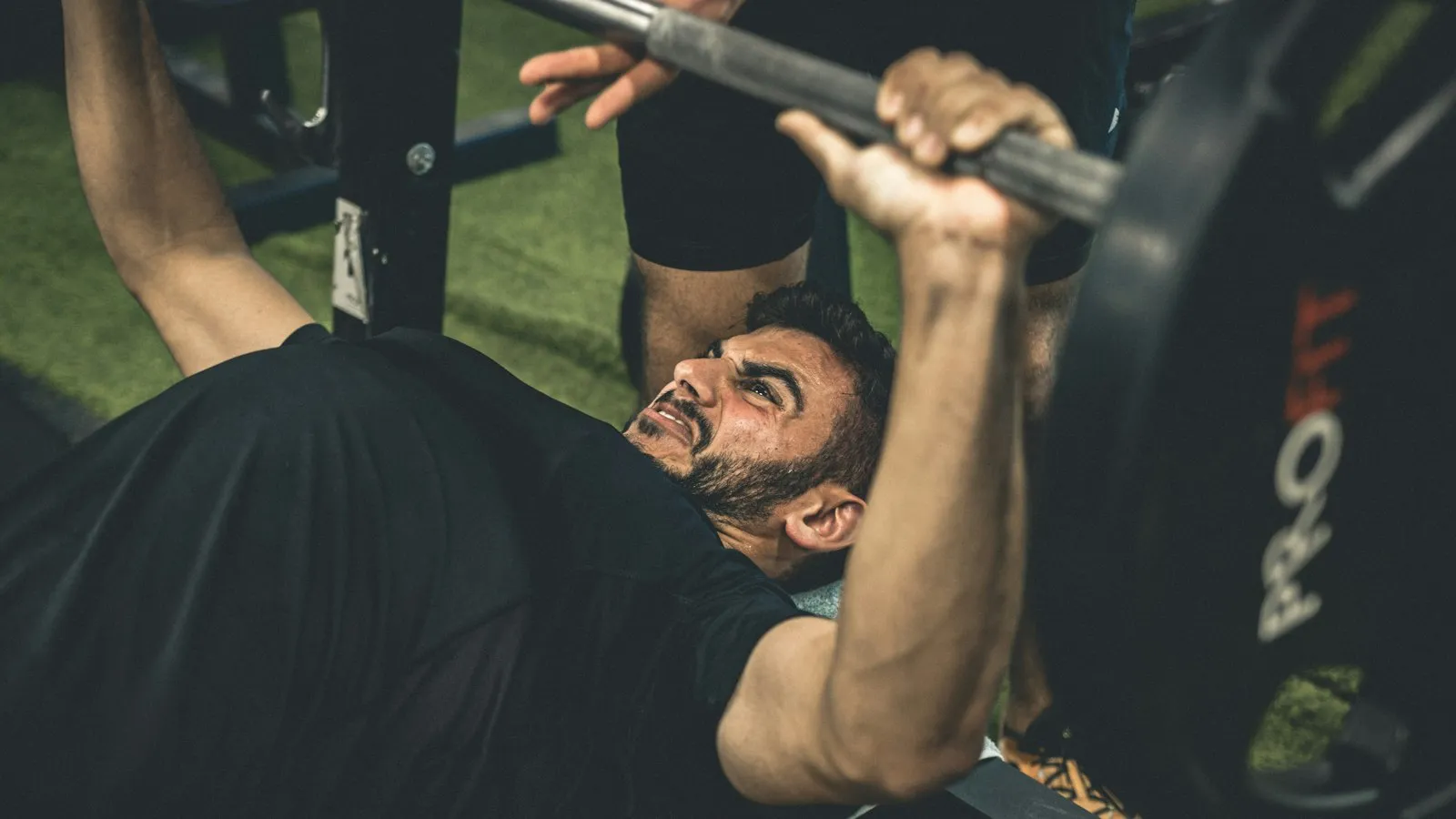
If you can train four days a week, the upper/lower split is one of the most balanced ways to do it. You alternate between upper-body and lower-body sessions, training each muscle twice a week — the frequency a meta-analysis found to outperform once-weekly training for muscle growth (Schoenfeld et al., 2016).
Schoenfeld et al., 2016; Schoenfeld et al., 2017
The weekly layout
| Mon | Tue | Wed | Thu | Fri | Sat | Sun |
|---|---|---|---|---|---|---|
| Upper A | Lower A | Rest | Upper B | Lower B | Rest | Rest |
Other layouts work too — for example Mon/Tue/Thu/Sat. Just avoid four days in a row if you can.
Upper A (strength focus)
| Exercise | Sets × reps | Rest |
|---|---|---|
| Bench press | 4 × 5–8 | 2–3 min |
| Barbell or chest-supported row | 4 × 6–10 | 2 min |
| Overhead press | 3 × 6–10 | 2 min |
| Lat pulldown or pull-up | 3 × 8–12 | 90 s |
| Dumbbell curl | 2 × 10–12 | 60 s |
| Triceps pushdown | 2 × 10–12 | 60 s |
Lower A (strength focus)
| Exercise | Sets × reps | Rest |
|---|---|---|
| Back squat | 4 × 5–8 | 2–3 min |
| Romanian deadlift | 3 × 6–10 | 2 min |
| Walking lunge | 3 × 10 each leg | 90 s |
| Leg curl | 3 × 10–12 | 60 s |
| Calf raise | 3 × 10–15 | 60 s |
Upper B (volume focus)
| Exercise | Sets × reps | Rest |
|---|---|---|
| Incline dumbbell press | 3 × 8–12 | 90 s |
| Seated cable row | 3 × 10–12 | 90 s |
| Dumbbell shoulder press | 3 × 8–12 | 90 s |
| Single-arm pulldown | 3 × 10–12 | 60 s |
| Lateral raise | 3 × 12–15 | 60 s |
| Face pull | 2 × 12–15 | 60 s |
Lower B (volume focus)
| Exercise | Sets × reps | Rest |
|---|---|---|
| Deadlift or trap-bar deadlift | 3 × 5 | 2–3 min |
| Leg press or front squat | 3 × 8–12 | 2 min |
| Bulgarian split squat | 3 × 8–10 each leg | 90 s |
| Hip thrust | 3 × 8–12 | 90 s |
| Plank or hanging knee raise | 3 × 30–45 s | 60 s |
How the volume adds up
Count the hard sets per muscle and you’ll find most major muscles get around 10–14 sets per week — in line with the dose-response relationship found between weekly sets and muscle growth (Schoenfeld et al., 2017).
Rest periods matter
Notice the longer rests on the big lifts. A study comparing rest periods found that 3-minute rests produced more strength and muscle growth than 1-minute rests in trained men (Schoenfeld et al., 2016). Short rests are fine on isolation exercises, but give your heavy compound sets time.
How to progress
- Strength days (A): use double progression in the 5–8 range. When you hit 8 reps on all sets, add weight.
- Volume days (B): focus on adding reps within the range, then add weight.
- Every 6–8 weeks: take a lighter week.
Upper/lower vs other splits
| Split | Days | Frequency per muscle | Best for |
|---|---|---|---|
| Full body | 2–3 | 2–3× | Beginners, busy schedules |
| Upper/lower | 4 | 2× | Most intermediates |
| Push/pull/legs | 6 | 2× | High-frequency lifters |
Common mistakes
- Making upper days too long. Upper days cover many muscles; keep them to 6 exercises.
- Skipping Lower B. End-of-week leg days are the easiest to drop. Swap days if needed — don’t skip.
- Same exercises every day. Using A and B variations spreads stress across joints.
Direct sets per muscle each week
| Muscle | Direct weekly sets | From |
|---|---|---|
| Back | 13 | Rows and pulldowns on both upper days |
| Quads | 13 | Squat, lunge, leg press, split squat |
| Shoulders | 11 | Two presses, lateral raise, face pull |
| Hamstrings | 9 | Romanian deadlift, leg curl, deadlift |
| Chest | 7 | Bench and incline press, plus help from the overhead presses |
Glutes get plenty of work from squats, lunges, deadlifts and hip thrusts. If you want more chest, add two sets of push-ups or dips to Upper B.
Warm up for each session
Spend five minutes on light cardio and dynamic moves for the body part you’re training, then do two or three lighter ramp-up sets of your first exercise. On lower days, include leg swings and bodyweight squats; on upper days, arm circles and band pull-aparts. See the 8-minute warm-up.
A 12-week plan
| Weeks | Focus |
|---|---|
| 1–2 | Learn the exercises; leave 3 reps in reserve on every set |
| 3–6 | Progress weights and reps; leave 1–2 reps in reserve |
| 7 | Lighter week: same weights, half the sets |
| 8–11 | Push for new bests on the A-day lifts |
| 12 | Lighter week, then retest or start a new block |
Short on time?
Pair exercises that don’t compete with each other and alternate between them, resting 60–90 seconds after each pair:
| Pair | Exercises |
|---|---|
| Upper A1 | Bench press + barbell row |
| Upper A2 | Overhead press + lat pulldown |
| Upper A3 | Curl + triceps pushdown |
Keep the heaviest sets of the day as straight sets with full rest, since longer rests support strength gains (Schoenfeld et al., 2016).
FAQ
Can beginners do upper/lower? Yes, if they can train four days a week. Start with fewer sets (2–3 per exercise).
What about cardio? Add walks or easy cycling on rest days.
Can I run it three days a week? Yes. Rotate through the four sessions continuously (Upper A, Lower A, Upper B, then Lower B the next week). Each muscle is then trained about 1.5 times a week.
The bottom line
Upper/lower gives you twice-weekly frequency, plenty of volume and manageable sessions on four days a week. It’s a split you can run for years.
Sources
- Schoenfeld BJ, Ogborn D, Krieger JW (2016). Effects of resistance training frequency on measures of muscle hypertrophy: a systematic review and meta-analysis. Sports Medicine. doi:10.1007/s40279-016-0543-8
- Schoenfeld BJ, Ogborn D, Krieger JW (2017). Dose-response relationship between weekly resistance training volume and increases in muscle mass. Journal of Sports Sciences. doi:10.1080/02640414.2016.1210197
- Schoenfeld BJ et al. (2016). Longer interset rest periods enhance muscle strength and hypertrophy in resistance-trained men. Journal of Strength and Conditioning Research. doi:10.1519/JSC.0000000000001272
This article is general education for healthy adults, not medical advice. Check with a qualified professional before starting a new exercise or nutrition plan, especially if you have a medical condition. Full disclaimer.
Keep reading
The Beginner Full-Body Dumbbell Workout (3 Days a Week)
A complete starter routine you can do at home with one pair of dumbbells — with sets, reps and how to progress.

How Much Exercise Do You Actually Need? What the WHO Guidelines Say
The global minimums for cardio and strength training, translated into a week you can actually schedule — plus an 8-week starter plan.

The 20-Minute No-Equipment Workout You Can Do Anywhere
A full-body bodyweight circuit with beginner, intermediate and advanced options.