New Mothers
Exercise and Breastfeeding: What You Need to Know
October 9, 2026 · 4 min read · New Mothers

If you’re breastfeeding or expressing, you might wonder whether exercise will affect your milk or make feeding harder. The reassuring answer from the evidence: for most women, moderate exercise and breastfeeding go together well.
What the guidelines say
The American College of Obstetricians and Gynecologists states that moderate exercise during breastfeeding does not affect the quantity or composition of breast milk or the baby’s growth (ACOG, 2020). The WHO’s guidelines encourage regular physical activity after childbirth, building towards at least 150 minutes of moderate activity a week (Bull et al., 2020).
Timing: feed first
ACOG suggests that women may want to feed or express before exercising to avoid the discomfort of full breasts (ACOG, 2020). Practical options:
| Your situation | Try |
|---|---|
| Baby feeds often | Exercise straight after a feed |
| You express | Express, then exercise while someone else gives a bottle |
| Baby naps after feeds | A 20–30 minute home session during the nap |
| Short on time | A brisk walk with the pram right after a feed |
Comfort tips
- A supportive sports bra that fits your current size. Bra sizes often change while breastfeeding, so it’s worth a fitting.
- Nursing sports bras with clips make feeding after exercise easier.
- Start low-impact — walking, cycling, swimming (once your doctor clears you), and strength exercises.
- Avoid too much pressure on your breasts: for lying-face-down exercises, use a rolled towel under your chest or choose an alternative.
- Watch for tenderness or redness, which can be signs of a blocked duct or mastitis — see your doctor or midwife if you have them, especially with a fever.
Stay hydrated
Breastfeeding and exercise both increase your fluid needs. Simple habits:
- Drink a glass of water with every feed.
- Keep a water bottle where you exercise.
- Thirst and dark urine are signs to drink more.
Eat enough
Breastfeeding uses energy, and very low-calorie diets aren’t recommended while you’re feeding. Focus on regular meals with protein, whole grains, fruit and vegetables rather than strict dieting. If you want to lose weight, aim for a slow, gradual change and talk to your doctor or midwife. See eating well with a newborn.
A breastfeeding-friendly week
| Day | Session | Timing |
|---|---|---|
| Mon | 25-min brisk pram walk | After the morning feed |
| Tue | 20-min home strength session | During the afternoon nap |
| Wed | 30-min walk with a friend | After a feed |
| Thu | Rest or gentle stretching | Anytime |
| Fri | 20-min home strength session | During a nap |
| Sat | Longer family walk | After a feed |
| Sun | Rest | — |
Choosing a sports bra
| Look for | Why |
|---|---|
| Wide, comfortable straps | Spread the load on your shoulders |
| Good support without underwire pressure | Avoids pressing on milk ducts |
| Front clips or pull-aside cups | Easier feeding after exercise |
| Breathable fabric | Comfort during and after exercise |
Get fitted — breast size often changes during the months of feeding.
Exercise ideas while breastfeeding
- Walking with a pram or carrier
- Bodyweight strength — squats to a chair, bridges, wall push-ups
- Swimming, once your doctor or midwife says it’s safe (usually after bleeding has stopped and any wounds have healed)
- Postnatal classes led by instructors trained in postnatal exercise
Weight and breastfeeding
Many women lose some weight gradually while breastfeeding, but everyone is different. Rather than dieting, focus on regular, nourishing meals and steady activity. If weight loss is a goal, discuss a gentle approach with your doctor or midwife.
When to get advice
Talk to your midwife, health visitor or a breastfeeding specialist if you notice a drop in supply, painful feeds, cracked nipples, or repeated blocked ducts — these are common and very fixable with the right help.
FAQ
Does exercise reduce milk supply? Not moderate exercise, according to ACOG (ACOG, 2020). Very low food intake or dehydration may affect supply, so eat and drink enough.
Can I lift weights while breastfeeding? Yes, once you’ve been cleared to exercise. Build up gradually and choose comfortable positions.
Do I need to wait after exercise before feeding? No set waiting time is needed for moderate exercise.
The bottom line
Moderate exercise is compatible with breastfeeding. Feed or express before you train, wear a supportive bra, drink water with every feed and eat regular, nourishing meals.
Sources
- American College of Obstetricians and Gynecologists (2020). Physical activity and exercise during pregnancy and the postpartum period: ACOG Committee Opinion No. 804. Obstetrics & Gynecology. doi:10.1097/AOG.0000000000003772
- Bull FC et al. (2020). World Health Organization 2020 guidelines on physical activity and sedentary behaviour. British Journal of Sports Medicine. doi:10.1136/bjsports-2020-102955
This article is general education for healthy adults, not medical advice. Check with a qualified professional before starting a new exercise or nutrition plan, especially if you have a medical condition. Full disclaimer.
Keep reading
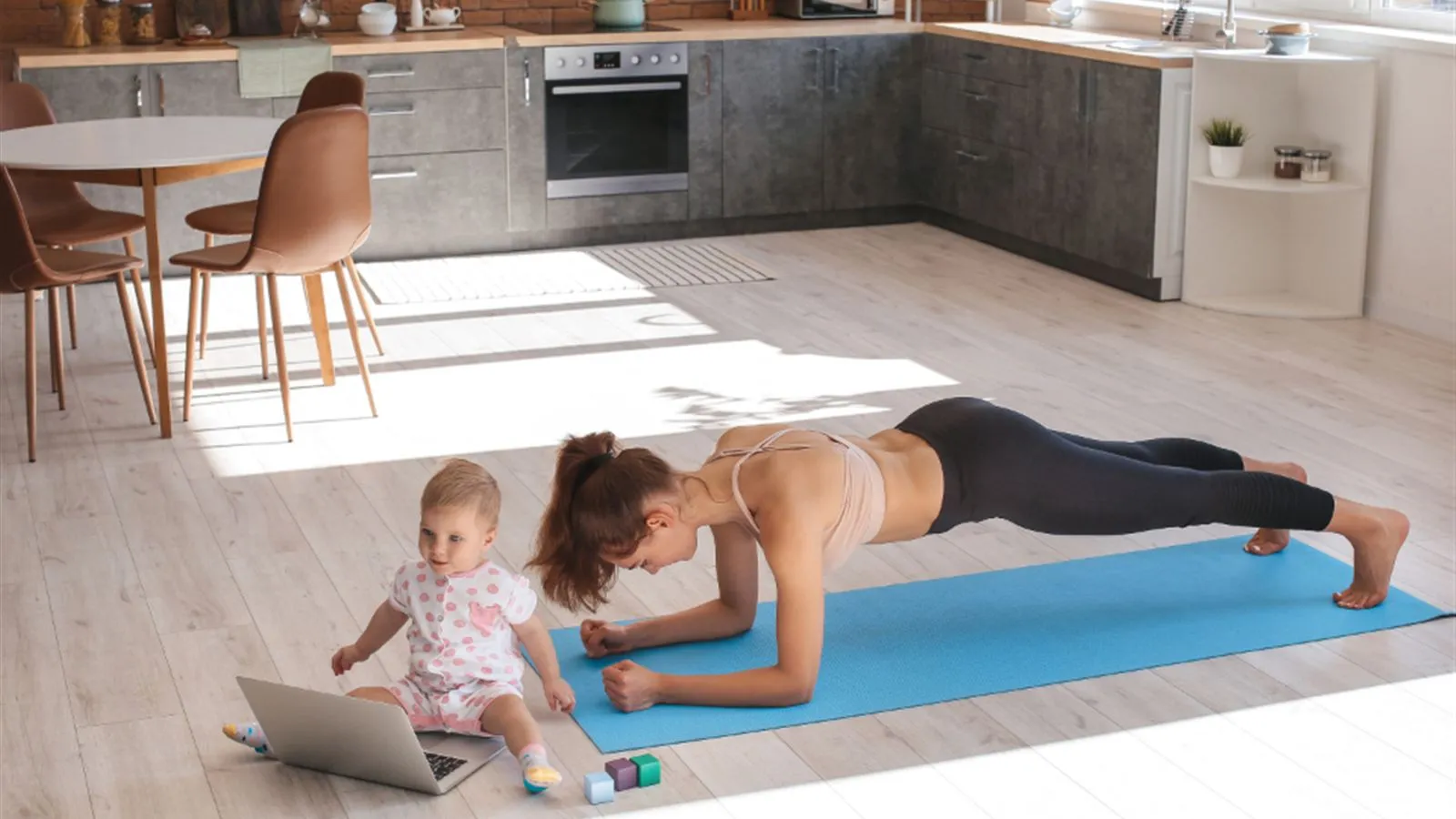
A 20-Minute Home Strength Workout (With Your Baby Nearby)
A gentle full-body routine for after your postnatal check, built around naps and floor time, with a 12-week progression.

A Postnatal Walking Plan: From 10 Minutes to 150 a Week
Walking is the easiest way back to fitness after birth. A gentle, week-by-week plan with the pram, plus how to know when to step it up.
Baby Blues or Postnatal Depression? How to Tell, and Where to Get Help
About 1 in 6 new mothers experience postnatal depression. The signs, how it differs from the baby blues, how movement can help, and when to reach out.