New Mothers
A 20-Minute Home Strength Workout (With Your Baby Nearby)
October 9, 2026 · 4 min read · New Mothers
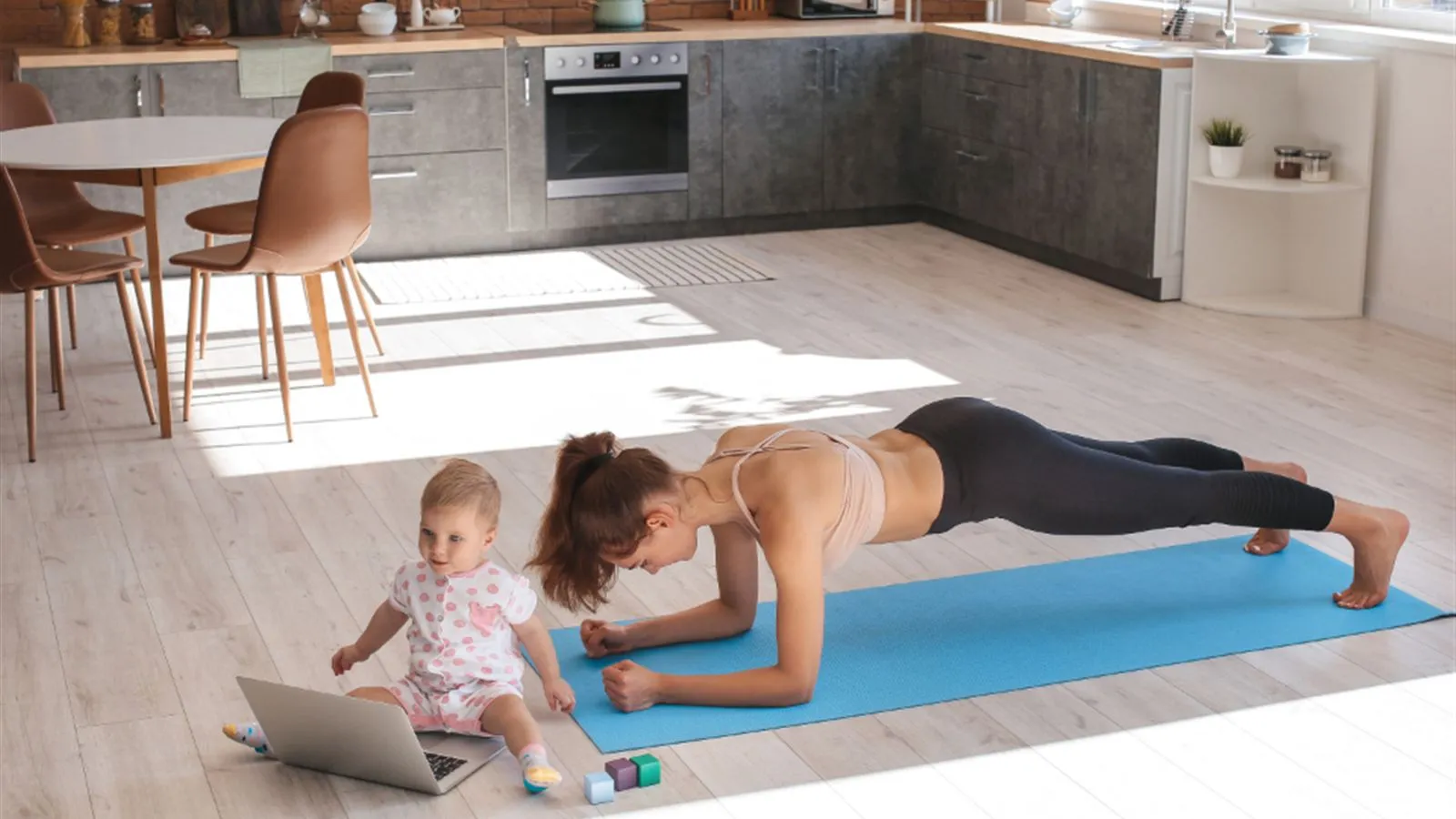
Lifting car seats, carrying your baby, bending to the cot a hundred times a day — motherhood is physical. Building strength makes it easier, and it doesn’t need a gym or a babysitter. This 20-minute routine fits into a nap or floor time.
Only start once your doctor or midwife has cleared you to exercise. Stop and get checked if you notice leaking, heaviness in the pelvis, pain or increased bleeding.
Why strength training?
The WHO recommends that women after childbirth include muscle-strengthening and gentle stretching alongside aerobic activity (Bull et al., 2020), and ACOG advises a gradual return to exercise once it’s medically safe (ACOG, 2020). You don’t need heavy weights: lighter loads can build muscle as long as sets are challenging (Schoenfeld et al., 2017).
The routine
Do each exercise for the reps listed, breathing out on the effort. Rest 30–60 seconds between exercises. Do 2 rounds to start, building to 3.
| # | Exercise | Reps | Easier | Harder |
|---|---|---|---|---|
| 1 | Sit-to-stand from a chair | 10 | Use your hands to help | Hold your baby (when comfortable) |
| 2 | Wall or counter push-up | 8–12 | Stand closer to the wall | Lower surface |
| 3 | Glute bridge | 12 | Smaller lift | Pause 3 seconds at the top |
| 4 | Bent-over row with water bottles | 10 each | Lighter bottles | Light dumbbells |
| 5 | Split squat holding a chair | 8 each leg | Shallower | No hand support |
| 6 | Side-lying leg lift | 10 each | Smaller range | Slow lowering |
| 7 | Bird dog | 6 each side | Arms only | Hold 3 seconds |
About 20 minutes including a short warm-up of marching on the spot and arm circles.
Including your baby
Babies love watching you move. Some ideas once you’re comfortable:
- Floor play: do bridges and bird dogs next to your baby on a playmat.
- Peekaboo push-ups: do wall or counter push-ups while you face your baby in a bouncer.
- Baby as weight: when you’re stronger and your baby has good head control, gently hold them close to your chest for sit-to-stands. Never do exercises that put your baby at risk of falling or being bumped.
A 12-week progression
| Weeks | Rounds | Focus |
|---|---|---|
| 1–3 | 2 | Learn the moves; breathe out on effort |
| 4–6 | 2–3 | Slow the lowering; add reps |
| 7–9 | 3 | Harder versions where symptom-free |
| 10–12 | 3 | Add light dumbbells or a backpack for rows and squats |
Our Return to Strength plan sets out every session, week by week, with walking and recovery built in.
Listen to your body
| Sign | What to do |
|---|---|
| Leaking, heaviness or bulging | Go back to an easier stage and see a pelvic health physiotherapist |
| Doming down the middle of your tummy | Choose an easier version; breathe out on effort |
| Pain in your back, pelvis or scar | Stop that exercise and get advice |
| Very tired after a bad night | Do one round, or go for a walk instead |
Fitting it in
- During your baby’s first nap of the day
- While your partner does bath time
- Split it: 10 minutes in the morning, 10 in the afternoon
Two or three sessions a week, plus walking, is a great routine.
Warm-up and cool-down (3 minutes each)
Warm-up: march on the spot, arm circles, gentle hip circles, 5 slow sit-to-stands.
Cool-down: child’s pose (if comfortable), chest stretch in a doorway, gentle hip-flexor stretch, 5 slow breaths.
Breathing during exercise
Breathe out as you make the effort — for example, as you stand up from a squat or push away from the wall. Avoid holding your breath, which increases pressure on your pelvic floor and tummy.
Equipment that helps (optional)
| Item | Use |
|---|---|
| Resistance band | Rows, bridges, side steps |
| Light dumbbells (2–5 kg) | Rows, squats, presses later on |
| A sturdy chair | Sit-to-stands, split squat support |
| An exercise mat | Floor exercises |
Water bottles or a backpack with books work just as well to start.
Signs you’re ready to progress
- The current version feels easy for all reps
- No leaking, heaviness, doming or pain during or after
- You’re recovering well between sessions
If you’re not there yet, stay at the current level — progress isn’t a race.
FAQ
When can I go back to the gym? Once you’re comfortable with home sessions and symptom-free, you can gradually return to gym classes or weights. Higher-impact classes are best reintroduced later.
Is it safe to hold my baby while exercising? Only for slow, controlled movements like sit-to-stands once you’re strong and stable, and never for jumping, lunging or anything where you might lose balance.
The bottom line
Twenty minutes, two or three times a week, with simple bodyweight moves builds the strength motherhood demands. Start after your postnatal check, progress slowly, and get checked if anything doesn’t feel right.
Sources
- Bull FC et al. (2020). World Health Organization 2020 guidelines on physical activity and sedentary behaviour. British Journal of Sports Medicine. doi:10.1136/bjsports-2020-102955
- American College of Obstetricians and Gynecologists (2020). Physical activity and exercise during pregnancy and the postpartum period: ACOG Committee Opinion No. 804. Obstetrics & Gynecology. doi:10.1097/AOG.0000000000003772
- Schoenfeld BJ et al. (2017). Strength and hypertrophy adaptations between low- vs. high-load resistance training: a systematic review and meta-analysis. Journal of Strength and Conditioning Research. doi:10.1519/JSC.0000000000002200
This article is general education for healthy adults, not medical advice. Check with a qualified professional before starting a new exercise or nutrition plan, especially if you have a medical condition. Full disclaimer.
Keep reading

A Postnatal Walking Plan: From 10 Minutes to 150 a Week
Walking is the easiest way back to fitness after birth. A gentle, week-by-week plan with the pram, plus how to know when to step it up.

Baby Blues or Postnatal Depression? How to Tell, and Where to Get Help
About 1 in 6 new mothers experience postnatal depression. The signs, how it differs from the baby blues, how movement can help, and when to reach out.
Back to Work After Maternity Leave: Keeping Movement in Your Week
Commutes, nursery runs and evening routines leave little time. Simple, habit-based ways to keep moving when you return to work.