New Mothers
A Postnatal Walking Plan: From 10 Minutes to 150 a Week
October 9, 2026 · 4 min read · New Mothers

Walking is the gentlest, most practical way to get moving again after having a baby. You can do it with the pram or a carrier, it fits around feeds and naps, and it gets you out of the house — which can do wonders for your mood.
Why walking first?
The WHO recommends that women after childbirth build towards at least 150 minutes of moderate activity a week (Bull et al., 2020). Brisk walking counts, and it’s low-impact, so it’s kind to a recovering body. ACOG advises resuming activity gradually, as soon as it’s medically safe (ACOG, 2020).
There’s a mood benefit too: a meta-analysis of randomised trials found that exercise-based programmes reduced symptoms of postnatal depression (Poyatos-León et al., 2017).
Before you start
- Get the go-ahead from your doctor or midwife, especially after a caesarean or a complicated birth.
- Start short and slow — the early weeks are about gentle movement, not fitness.
- Stop and get checked if you have leaking, heaviness in the pelvis, increased bleeding or pain.
The 8-week walking plan
| Week | Walks per week | Length | Pace |
|---|---|---|---|
| 1 | 3–5 | 10 min | Easy |
| 2 | 4–5 | 15 min | Easy |
| 3 | 5 | 20 min | Easy, a few brisker minutes |
| 4 | 5 | 20–25 min | Mostly brisk |
| 5 | 5 | 25 min | Brisk |
| 6 | 5 | 30 min | Brisk |
| 7 | 5 | 30 min | Brisk, add a gentle hill |
| 8 | 5 | 30+ min | Brisk — that’s 150 minutes a week |
Repeat a week whenever you need to. A bad night’s sleep is a good reason for an easier day.
How brisk is brisk?
Use the talk test: you should be able to talk in sentences but not sing. That’s moderate intensity.
Pram and carrier tips
- Stand tall and keep the pram close so you don’t lean forward.
- Adjust the handle to about hip height.
- Carriers: wear the baby high and snug, and choose flat routes at first.
- Switch sides if you’re pushing one-handed while holding a drink or phone.
Make it social
- Join a local buggy-walking group or meet a friend.
- Walk to a café, the library or a park — a destination makes it easier to go.
- Take a different route each day to keep it interesting.
Beyond walking
Once walking feels easy and you’re free of symptoms, you can add gentle strength work two or three times a week — see strength with your baby. The WHO also encourages muscle-strengthening and gentle stretching after birth (Bull et al., 2020).
When walking doesn’t feel right
Some women find walking brings on pelvic heaviness, leaking or back pain, especially later in the day. That’s a sign to slow down, shorten walks and see a pelvic health physiotherapist, who can help you build up safely.
Make your walks a little harder (when you’re ready)
| Week 9+ option | How |
|---|---|
| Hills | Include a gentle hill on two walks a week |
| Intervals | Alternate 2 minutes brisk with 2 minutes easy, 5 times |
| Longer weekend walk | 45–60 minutes at a comfortable pace |
| Add strength stops | Pause at a bench for 10 sit-to-stands and 10 incline push-ups |
Only add challenge if you’re free of symptoms like leaking, heaviness or pain.
Track your progress
Note each walk in your phone or a notebook: minutes, how you felt (1–5) and any symptoms. Seeing the minutes climb towards 150 a week is motivating, and the notes are useful if you need to talk to a physiotherapist.
Weather-proof options
- Covered shopping centres for rainy days
- Indoor marching and step-ups on the bottom stair for 10 minutes
- A rain cover for the pram and a good waterproof for you
Walking and mood
Getting outside in daylight, meeting other parents and moving your body all help on hard days. Exercise programmes have been shown to reduce symptoms of postnatal depression (Poyatos-León et al., 2017) — but if low mood persists, talk to your doctor or health visitor.
FAQ
Does pushing a pram count as exercise? Yes — brisk walking with a pram is moderate activity. Hills make it harder.
What if it’s raining? Walk in a covered shopping centre, or try a short indoor routine of marching on the spot and gentle bodyweight moves.
I’m exhausted. Should I still walk? A short, easy walk outside often helps energy and mood, but rest when you need to. Recovery comes first.
The bottom line
Start with 10-minute walks once you’re cleared, add a few minutes each week, and work up to 30 minutes, five days a week — 150 minutes of activity, with your baby along for the ride.
Sources
- Bull FC et al. (2020). World Health Organization 2020 guidelines on physical activity and sedentary behaviour. British Journal of Sports Medicine. doi:10.1136/bjsports-2020-102955
- American College of Obstetricians and Gynecologists (2020). Physical activity and exercise during pregnancy and the postpartum period: ACOG Committee Opinion No. 804. Obstetrics & Gynecology. doi:10.1097/AOG.0000000000003772
- Poyatos-León R et al. (2017). Effects of exercise-based interventions on postpartum depression: a meta-analysis of randomized controlled trials. Birth. doi:10.1111/birt.12294
This article is general education for healthy adults, not medical advice. Check with a qualified professional before starting a new exercise or nutrition plan, especially if you have a medical condition. Full disclaimer.
Keep reading
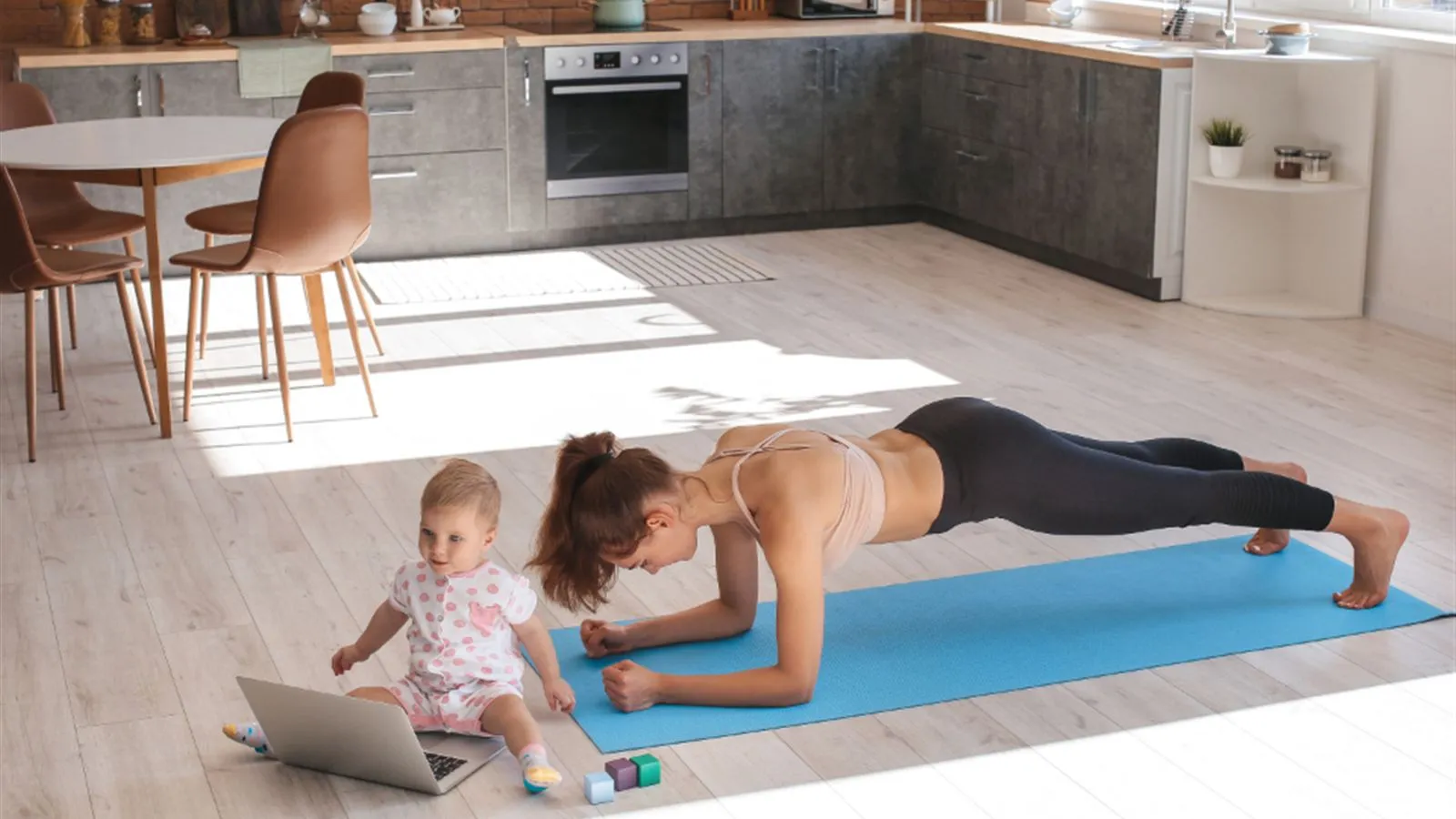
A 20-Minute Home Strength Workout (With Your Baby Nearby)
A gentle full-body routine for after your postnatal check, built around naps and floor time, with a 12-week progression.

Baby Blues or Postnatal Depression? How to Tell, and Where to Get Help
About 1 in 6 new mothers experience postnatal depression. The signs, how it differs from the baby blues, how movement can help, and when to reach out.
Back to Work After Maternity Leave: Keeping Movement in Your Week
Commutes, nursery runs and evening routines leave little time. Simple, habit-based ways to keep moving when you return to work.