Working Women
Short on Time? Why 30-Minute Workouts Really Work
October 2, 2026 · 5 min read · Working Women
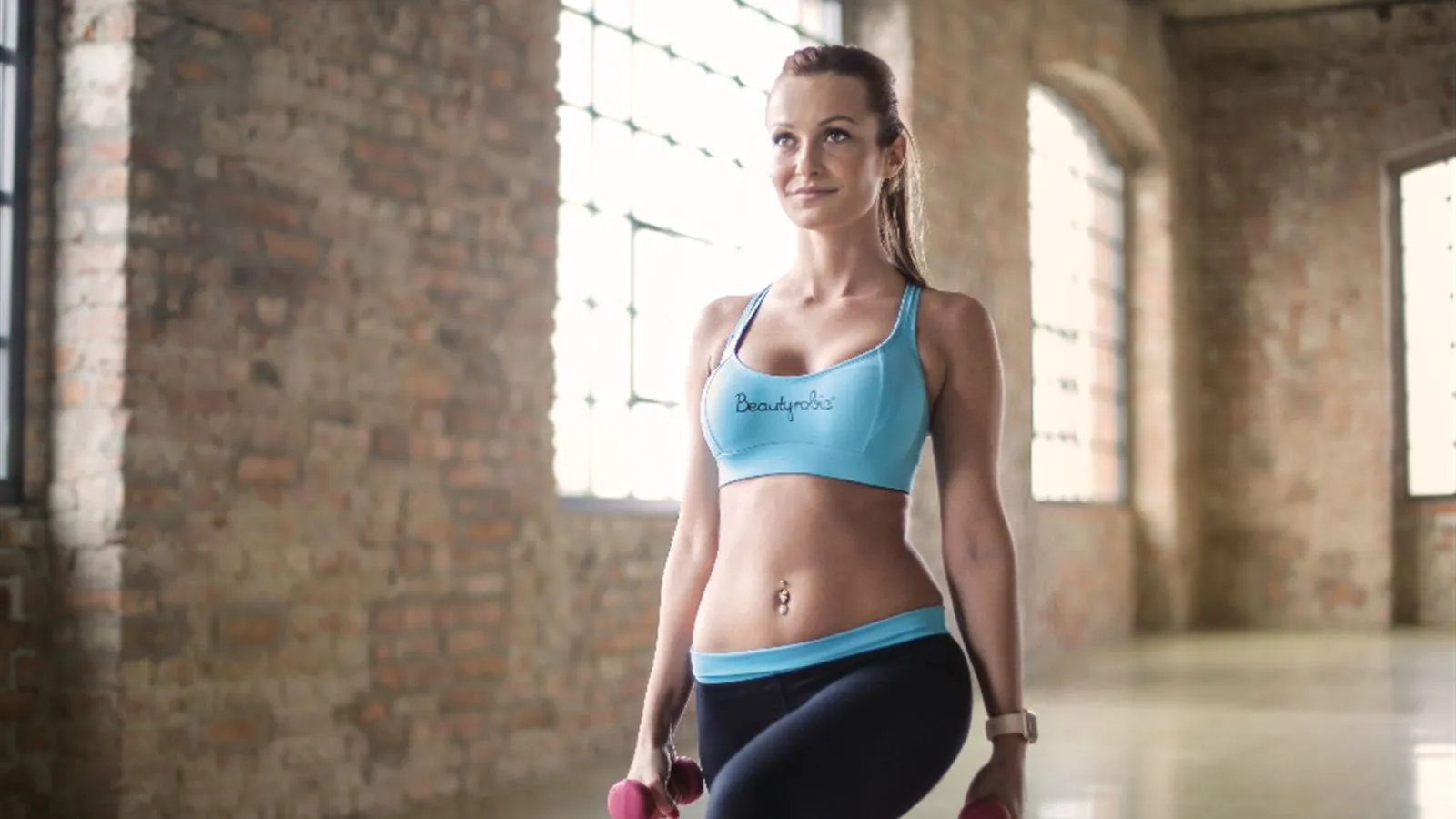
If your week is full of meetings, commutes and everyone else’s needs, an hour-long workout can feel impossible. The good news: you don’t need one. Strength, fitness and energy all respond to short, focused sessions — as long as you do them consistently and they’re genuinely challenging.
What the research says about “enough”
You can build strength on very little. A review of the minimum effective dose found that strength improved even with as little as one hard set per exercise, two or three times a week (Androulakis-Korakakis et al., 2020). More can be better, but less still works.
Frequency matters more than marathon sessions. Training each muscle at least twice a week produced more muscle growth than once a week in a meta-analysis (Schoenfeld et al., 2016). Three 30-minute full-body sessions hit every muscle three times.
Total weekly sets drive results. Muscle growth rose with the number of hard sets per week (Schoenfeld et al., 2017). Short sessions get there by wasting nothing — no long chats, no scrolling between sets.
The WHO’s targets are achievable in short blocks. The guidelines recommend at least 150 minutes of moderate activity a week plus muscle-strengthening on two or more days — and note that every bit of activity counts (Bull et al., 2020).
The 30-minute full-body template
| Time | What you do |
|---|---|
| 0–4 min | Warm-up: brisk marching, arm circles, bodyweight squats, hip bridges |
| 4–14 min | Pair 1: squat pattern + push pattern, 3 rounds |
| 14–24 min | Pair 2: hinge pattern + pull pattern, 3 rounds |
| 24–29 min | Finisher: lunge + core, 2 rounds |
| 29–30 min | Slow breathing, stretch whatever feels tight |
Pairing means alternating two exercises that use different muscles — for example, squats then push-ups — resting about 45–60 seconds after each. Your legs recover while your upper body works, so you get the benefit of rest without standing around.
Example session (dumbbells or bodyweight)
| Pair | Exercise A | Exercise B |
|---|---|---|
| 1 | Goblet squat or bodyweight squat, 8–12 reps | Push-up (incline if needed), 6–12 reps |
| 2 | Romanian deadlift or single-leg hip bridge, 10–12 reps | One-arm row or towel row, 10–12 each |
| Finisher | Reverse lunge, 8 each leg | Dead bug, 8 each side |
Make every minute count
- Pick the hardest version you can do well. Sets should end with only 1–3 good reps left in the tank.
- Write down your numbers. Next session, beat one of them — a rep, a little weight, or a slower lowering.
- Lay out your kit the night before. Shoes by the door, dumbbells in the living room.
- Use a timer. It keeps rest honest and the session to 30 minutes.
A realistic week
| Mon | Tue | Wed | Thu | Fri | Sat | Sun |
|---|---|---|---|---|---|---|
| 30-min strength | 20-min walk at lunch | 30-min strength | Walk or rest | 30-min strength | Longer walk, family activity | Rest |
That’s 90 minutes of strength plus walking — comfortably meeting both WHO targets without a single long session.
When life gets busier still
- 20 minutes: do Pair 1 and Pair 2 only.
- 10 minutes: two rounds of squat, push-up, row, done.
- Zero minutes: take the stairs and walk your next call. Movement still counts — see our guide to exercise snacks.
An 8-week progression
| Weeks | What changes |
|---|---|
| 1–2 | Learn the movements; 2 sets of each, stopping with 3 reps in reserve |
| 3–4 | Full 3 sets; push closer to the top of each rep range |
| 5–6 | Harder versions (pauses, slower lowering, heavier dumbbells); week 6 lighter |
| 7–8 | Heavier weights, 6–10 reps, slightly longer rests |
Each block is still 30 minutes. What changes is how hard each set is — which is what drives progress.
How to tell if a set was hard enough
Use reps in reserve: when you stop, how many more good reps could you have done?
| Reps left | Verdict |
|---|---|
| 5 or more | Too easy — add weight or reps next time |
| 1–3 | Just right for most sets |
| 0 | Fine occasionally, but don’t make every set an all-out grind |
No equipment? Swap in these
| Dumbbell exercise | Bodyweight version |
|---|---|
| Goblet squat | Slow squat with a 2-second pause |
| Dumbbell row | Towel row on a sturdy closed door |
| Romanian deadlift | Single-leg hip bridge |
| Shoulder press | Pike push-up against a wall |
Fuel the work
Strength sessions work best with enough protein. A palm-sized portion at each meal is a simple start — use our free calorie and macro calculator for a personal target.
FAQ
Is 30 minutes enough to see results? For strength and general fitness, yes — particularly three times a week, progressed steadily, with enough protein.
Should I do cardio instead? Strength training is the piece most busy women miss. Walking and everyday activity cover much of the aerobic side.
What if I miss a session? Just do the next one. Consistency over months matters far more than any single week.
Can I split one session into two 15-minute blocks? Yes. Do Pair 1 in the morning and Pair 2 in the evening — the total work is what counts.
The bottom line
Thirty focused minutes, three times a week, hits every muscle often enough to get stronger. Pair your exercises, push each set close to failure, and beat one number each time. For a complete 8-week progression, see the 30-Minute Strong Plan.
Sources
- Androulakis-Korakakis P, Fisher JP, Steele J (2020). The minimum effective training dose required to increase 1RM strength in resistance-trained men. Sports Medicine. doi:10.1007/s40279-019-01236-0
- Schoenfeld BJ, Ogborn D, Krieger JW (2016). Effects of resistance training frequency on measures of muscle hypertrophy: a systematic review and meta-analysis. Sports Medicine. doi:10.1007/s40279-016-0543-8
- Schoenfeld BJ, Ogborn D, Krieger JW (2017). Dose-response relationship between weekly resistance training volume and increases in muscle mass. Journal of Sports Sciences. doi:10.1080/02640414.2016.1210197
- Bull FC et al. (2020). World Health Organization 2020 guidelines on physical activity and sedentary behaviour. British Journal of Sports Medicine. doi:10.1136/bjsports-2020-102955
This article is general education for healthy adults, not medical advice. Check with a qualified professional before starting a new exercise or nutrition plan, especially if you have a medical condition. Full disclaimer.
Keep reading
Morning or Evening Workouts? Pick the One You'll Keep
The best time to train is the one that survives your real week. How to choose, and how to turn it into an automatic habit.
Strength Training After 40: Muscle, Bones and Menopause
Why lifting matters more with every decade, what the LIFTMOR trial found about bone density, and how to start safely.

Exercise for Stress and Low Mood: What a Huge Review Found
An overview of 97 reviews covering more than 128,000 people found physical activity meaningfully reduced depression, anxiety and distress. Here's how to use it.