Working Women
Strength Training After 40: Muscle, Bones and Menopause
October 9, 2026 · 4 min read · Working Women
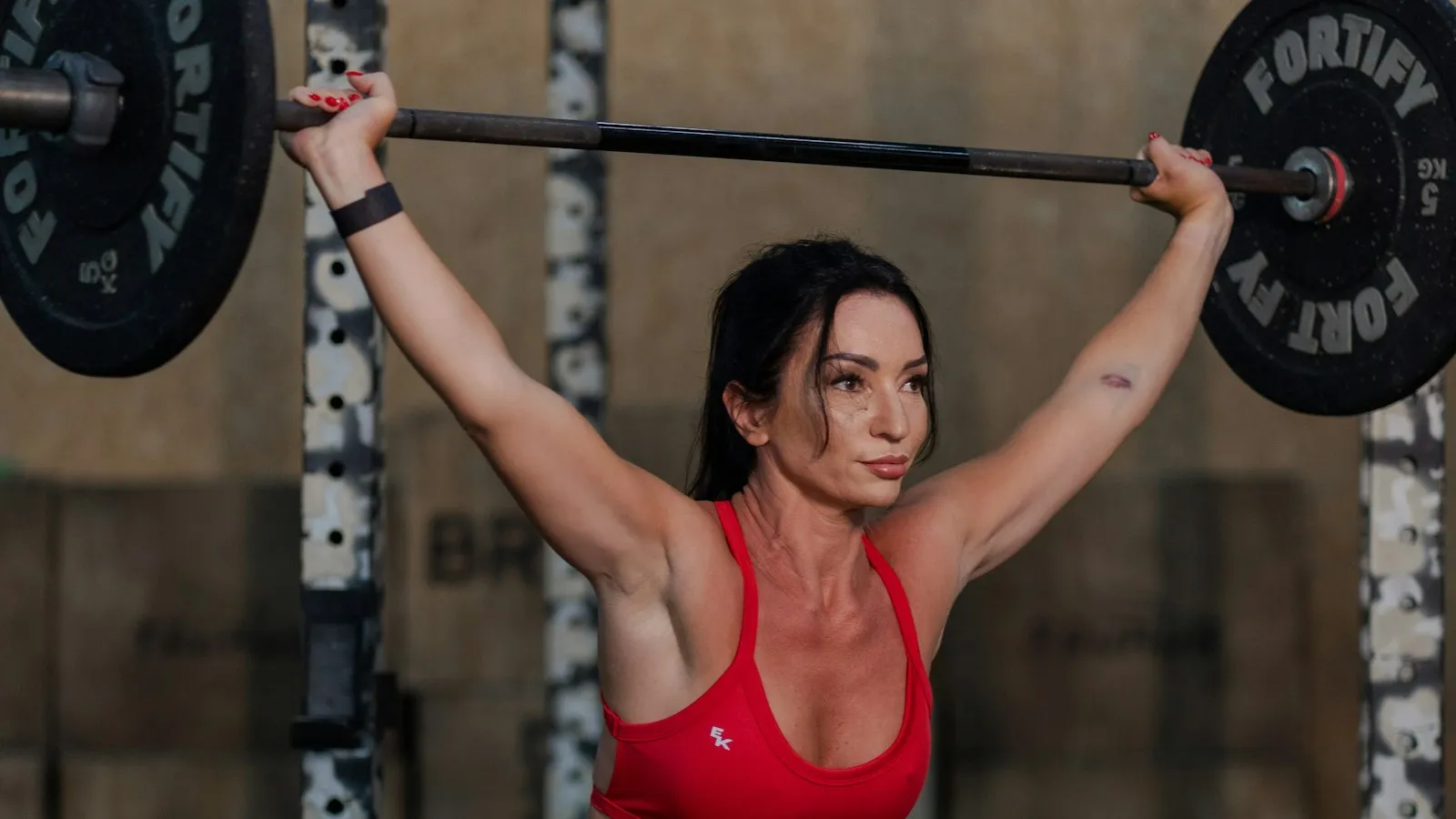
From our 40s onwards, muscle and bone gradually decline unless we give them a reason not to. Around menopause, falling oestrogen speeds up bone loss. The good news: strength training is one of the most effective ways to push back — and it’s never too late to start.
Watson et al., 2018
What the research shows
Bone. In the LIFTMOR trial, postmenopausal women with low bone mass were randomly assigned to either supervised high-intensity resistance and impact training — progressing to heavy deadlifts, squats and overhead presses, plus jumping chin-ups with drop landings — or a low-intensity home program. After eight months, the high-intensity group improved bone mineral density at the lumbar spine and femoral neck and physical function more than the control group (Watson et al., 2018). Training was closely supervised and built up gradually.
Long-term health. A meta-analysis found that muscle-strengthening activities were associated with a 10–17% lower risk of death from all causes, cardiovascular disease and cancer (Momma et al., 2022).
Guidelines. The WHO recommends muscle-strengthening activity on two or more days a week, and for older adults adds balance and strength training to help prevent falls (Bull et al., 2020).
Why it matters more now
| What changes with age | What strength training does |
|---|---|
| Muscle mass and strength gradually decline | Builds and maintains muscle |
| Bone density falls, faster around menopause | Loading bones helps maintain or improve density |
| Balance worsens, falls become riskier | Leg strength and balance work reduce fall risk |
| Metabolism and body composition shift | More muscle supports everyday energy and function |
How to start safely
- Check in with your doctor if you have osteoporosis, joint problems, high blood pressure or another condition — and ask whether there are movements to avoid.
- Learn the patterns with light loads: squat (to a chair at first), hip hinge, push, pull, carry.
- Progress steadily. Add reps first, then weight. Over months, many women can lift much more than they expect.
- Two or three sessions a week, 30 minutes each, is plenty.
- Add balance and impact gradually — for example, single-leg stands, step-ups, and (if your doctor agrees) small hops.
- Consider a coach. Heavier lifting like that in LIFTMOR was supervised; a qualified coach can teach you good technique.
A starter week
| Day | Session |
|---|---|
| Mon | Squat to chair, hip bridge, wall or incline push-up, one-arm row, farmer’s carry — 2–3 sets each |
| Wed | Brisk walk 30 min + balance practice 5 min |
| Thu | Repeat Monday, adding a little weight or reps |
| Sat | Longer walk, hike or dance class |
Eat to support it
Protein matters even more as we age. A meta-analysis found benefits for muscle levelled off at around 1.6 g of protein per kg of bodyweight per day (Morton et al., 2018). Spread it across meals, and talk to your doctor about calcium and vitamin D.
Menopause symptoms
Hot flushes, poor sleep and joint aches can make training harder some weeks. Lower the intensity on rough days rather than skipping altogether, and talk to your doctor about symptom management — that’s a medical conversation worth having.
Balance practice (5 minutes, most days)
| Drill | How | Progress |
|---|---|---|
| Single-leg stand | Hold a counter; lift one foot for 20–30 s | Let go; then close your eyes briefly |
| Heel-to-toe walk | Walk a straight line, heel touching toe | Look straight ahead, not down |
| Step-ups | Step onto a low stair and stand tall | Higher step; hold light dumbbells |
| Sit-to-stand | Stand up from a chair without using your hands | Slower lowering; lower chair |
The WHO recommends balance and strength training for older adults to help prevent falls (Bull et al., 2020) — but it’s worth starting in your 40s and 50s.
Your weekly mix after 40
| Type | How often |
|---|---|
| Strength (whole body) | 2–3 sessions |
| Brisk walking or other aerobic activity | 150+ minutes across the week |
| Balance practice | A few minutes most days |
| Mobility or stretching | 2–3 short sessions |
Recovery matters more
Recovery tends to take a little longer with age. Leave at least a day between hard strength sessions for the same muscles, sleep 7+ hours, and spread protein across meals — around 1.6 g per kg of bodyweight a day was where the benefit for muscle levelled off (Morton et al., 2018).
Track what matters
Record the weights you lift, how far you walk, and simple tests like how many sit-to-stands you can do in 30 seconds. Seeing these improve is motivating — and a real sign your body is getting stronger.
FAQ
Is it safe to lift heavy if I have osteopenia? The LIFTMOR results are encouraging, but the training was supervised. Get medical advice and expert coaching before lifting heavy.
I’ve never lifted before. Is it too late? No. Strength responds to training at any age.
The bottom line
After 40, strength training protects muscle and bone, supports balance and is linked to better long-term health. Start light, progress steadily, eat enough protein, and get medical advice and coaching if you have low bone density.
Sources
- Watson SL et al. (2018). High-intensity resistance and impact training improves bone mineral density and physical function in postmenopausal women with osteopenia and osteoporosis: the LIFTMOR randomized controlled trial. Journal of Bone and Mineral Research. doi:10.1002/jbmr.3284
- Momma H et al. (2022). Muscle-strengthening activities are associated with lower risk and mortality in major non-communicable diseases. British Journal of Sports Medicine. doi:10.1136/bjsports-2021-105061
- Bull FC et al. (2020). World Health Organization 2020 guidelines on physical activity and sedentary behaviour. British Journal of Sports Medicine. doi:10.1136/bjsports-2020-102955
- Morton RW et al. (2018). A systematic review, meta-analysis and meta-regression of the effect of protein supplementation on resistance training-induced gains in muscle mass and strength. British Journal of Sports Medicine. doi:10.1136/bjsports-2017-097608
This article is general education for healthy adults, not medical advice. Check with a qualified professional before starting a new exercise or nutrition plan, especially if you have a medical condition. Full disclaimer.
Keep reading

Morning or Evening Workouts? Pick the One You'll Keep
The best time to train is the one that survives your real week. How to choose, and how to turn it into an automatic habit.

Exercise for Stress and Low Mood: What a Huge Review Found
An overview of 97 reviews covering more than 128,000 people found physical activity meaningfully reduced depression, anxiety and distress. Here's how to use it.

Sleep When You're Busy: The Habits That Matter Most
When time is tight, sleep is usually the first thing cut. Here's how much you need, and the five habits with the biggest payoff.