Little Ones
Why Family Meals Matter (Even 3 a Week)
October 5, 2026 · 4 min read · Kids & Family
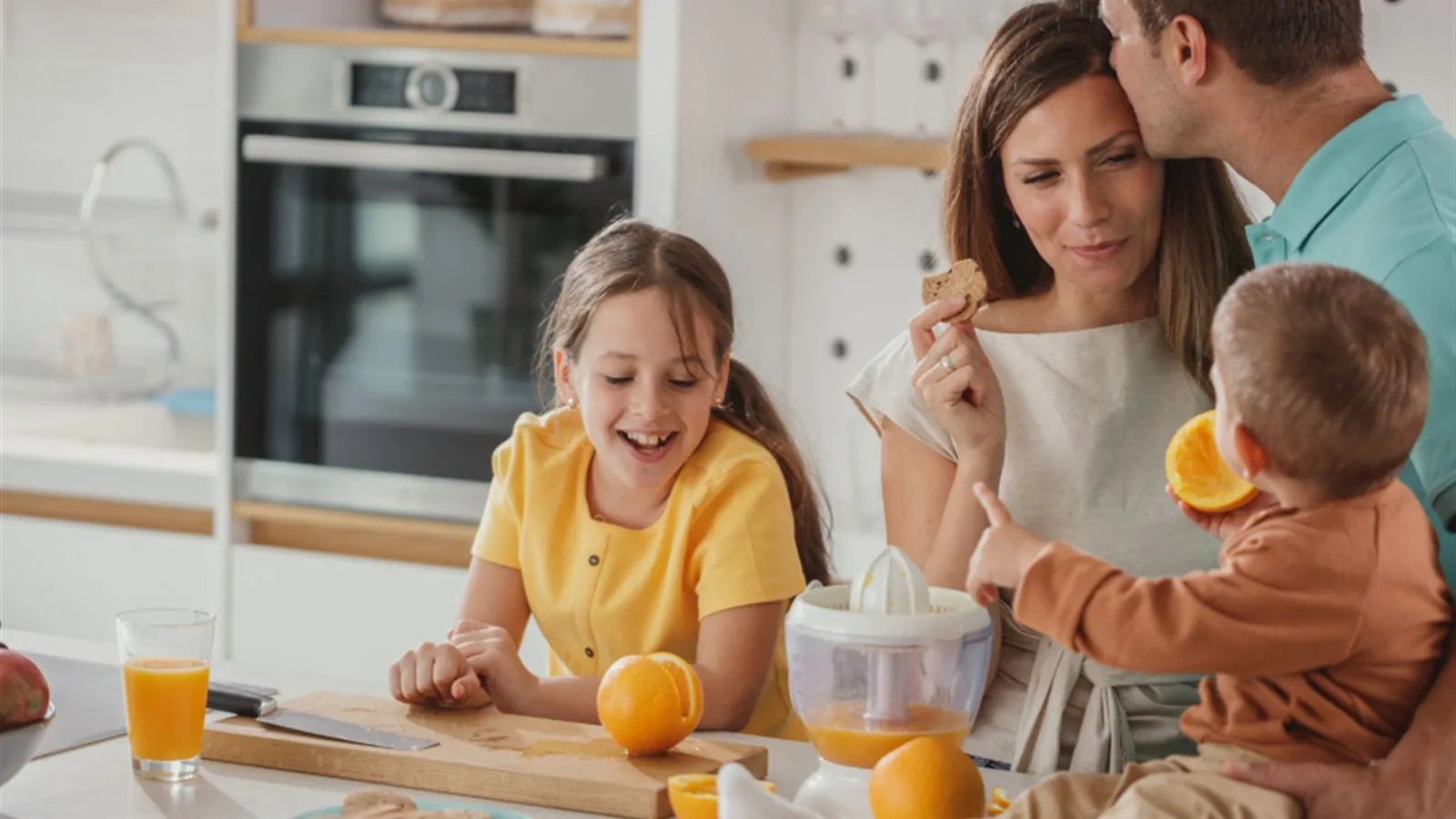
With work, nursery pick-ups and different schedules, sitting down together can feel impossible. But you don’t need a family dinner every night to make a difference. Research suggests three a week is a meaningful target.
The research
In 2011, Amber Hammons and Barbara Fiese combined 17 studies involving 182,836 children and adolescents aged roughly 3 to 17 (Hammons & Fiese, 2011). Compared with those who ate fewer shared meals, children who ate three or more family meals a week had:
Hammons & Fiese, 2011. Observational studies: associations, not proof of cause.
View as table
| Item | % |
|---|---|
| Disordered eating (lower) | 35 |
| Eating healthy foods (higher) | 24 |
| Eating unhealthy foods (lower) | 20 |
| Being overweight (lower) | 12 |
These are associations — families who eat together may differ in other ways — but the findings were consistent across studies.
Why shared meals may help
- Children copy what they see. Watching adults eat vegetables makes them more likely to try them.
- Regular routines mean fewer grazing snacks.
- Conversation — mealtimes are one of the few daily times families talk without screens.
- Repeated exposure to a variety of foods, which helps children accept new tastes (Wardle et al., 2003).
What counts as a family meal?
It doesn’t have to be dinner, and it doesn’t have to be everyone:
- Breakfast together at weekends
- One parent and the children at teatime
- A picnic at the park
- Grandparents’ Sunday lunch
What matters is sitting together, eating the same food, with screens off.
Make it easier
| Barrier | Fix |
|---|---|
| Different schedules | Aim for 3 meals a week, whichever meals work |
| No time to cook | Batch-cook at weekends; simple 15-minute meals on weekdays |
| Fussy eaters | One shared meal, with at least one food each child usually eats |
| Toddler won’t sit still | Short meals (15–20 minutes) are fine; a booster seat at table height helps |
| Screens at the table | A basket for phones, TV off |
One meal, the whole family
Cooking separate meals for children is exhausting and can reinforce fussy eating. Instead, adapt one family meal:
- Serve components separately so children can choose what goes on their plate.
- Keep spices on the side for adults.
- Cut food into safe, manageable pieces for toddlers.
- Include one familiar food at every meal.
Talk, don’t police
Keep the conversation light. Ask about their day, play “favourite thing” games, talk about the colours and textures of the food. Try not to comment on how much or how little a child eats — let them listen to their own hunger.
Conversation starters for little ones
- What was the best part of your day?
- What colour foods are on your plate?
- Which animal would you like to have dinner with?
- What did you play today?
- If you could eat anything for breakfast tomorrow, what would it be?
Simple, fun questions keep meals relaxed and help children practise talking and listening.
Getting children involved
| Age | Jobs they can help with |
|---|---|
| 1–2 | Washing vegetables, tearing lettuce, carrying napkins |
| 2–3 | Stirring, pouring (with help), setting out spoons |
| 3–4 | Mashing, spreading, cracking eggs (with help), setting the table |
| 4–5 | Measuring, peeling (with a child-safe peeler), helping plan the menu |
Children are more likely to try foods they’ve helped prepare — and repeated, low-pressure exposure helps them accept new tastes over time (Wardle et al., 2003).
A realistic family meal week
| Day | Shared meal |
|---|---|
| Tue | Dinner together — one parent and the children |
| Thu | Breakfast together before nursery |
| Sat | Family lunch or a picnic |
| Sun | Dinner with everyone |
That’s four shared meals without needing every night to go to plan.
Keep meals short and positive
For toddlers, 15–20 minutes at the table is plenty. End the meal calmly when they’ve had enough, and try not to use food as a reward or punishment.
FAQ
Does it count if we eat in front of the TV? Some benefits may come from conversation and attention, so screens off is better when you can.
My partner works late. Does a meal without them count? Yes. Any adult eating with the children counts.
The bottom line
Aim for three shared family meals a week — any meal, any combination of adults. Screens off, one meal for everyone, and relaxed conversation. Research links this simple habit with healthier eating in children.
Sources
- Hammons AJ, Fiese BH (2011). Is frequency of shared family meals related to the nutritional health of children and adolescents? Pediatrics. doi:10.1542/peds.2010-1440
- Wardle J, Cooke LJ, Gibson EL et al. (2003). Increasing children’s acceptance of vegetables; a randomized trial of parent-led exposure. Appetite. doi:10.1016/S0195-6663(02)00135-6
This article is general education for healthy adults, not medical advice. Check with a qualified professional before starting a new exercise or nutrition plan, especially if you have a medical condition. Full disclaimer.
Keep reading

Toddler Snacks: Simple, Healthy and Safe
Twenty snack ideas for ages 1–5, how to prepare them to reduce choking risk, and how to stop snacks from spoiling meals.

A Bedtime Routine for Toddlers That Actually Works
A study of more than 10,000 families found a consistent bedtime routine was linked to better sleep — and more nights meant better results. Here's a simple one.

How Much Sleep Do Toddlers and Preschoolers Need?
Recommended hours from the American Academy of Sleep Medicine, sample schedules with naps, and signs your child isn't getting enough.